



What Hotel Guests Want From Technology (And Why Most Hotels Get It Wrong)
 By Duve Team
By Duve Team
By Duve Team Stay updated on the latest Guest Experience and Hospitality Tech updates.
The most-talked-about technology of the last five years in hospitality is the kind guests will never mention when asked what made their stay memorable. Self-check-in. Mobile keys. AI concierges. Smart room controls. All of them have generated more conference panels than almost any other category of innovation, and almost none of them, on their own, has produced the kind of guest story that ends in a five-star review. So the question worth asking is no longer what hotel guests want from technology in the abstract. It’s whether the industry has been listening to the right part of the answer.
Read any guest survey from the last three years and the surface conclusion looks settled: travelers want more technology in their hotel stay. 73% of guests say they prefer hotels that offer self-service technology to minimize contact with staff. 74% want hotels to use AI to better tailor services and offers. 77% are open to automated messaging for service requests. The numbers are clean, consistent, and have produced a near-uniform response from the hospitality technology buying class: more apps, more dashboards, more touchpoints, more automation.
But spend any time inside the verbatim comments underneath those percentages — the long-form survey responses, the one-star reviews, the post-stay interviews — and a different story emerges. Guests aren’t asking for more technology. They’re asking for fewer of the small frictions that have crept into the modern hotel stay. They’re tired of arriving at midnight to a 14-minute check-in queue. They’re tired of asking three different staff members for a toothbrush. They’re tired of getting a pre-arrival email that requests information they already provided at booking. The preference for self-service is the symptom. The underlying demand is for speed, attentiveness, and warmth — qualities the industry once delivered through deeply staffed front desks, and now has to deliver some other way.
Read literally, the 73% statistic sounds like guests no longer want human service. Read in context, it sounds like guests have started to associate human contact in hotels with friction: with waiting, with re-explaining themselves, with being handed between departments. That is a very different problem to solve.
There’s a reason the demand for hotel technology has accelerated in lockstep with the industry’s staffing crisis. According to the American Hotel & Lodging Association, 65% of hotels are still reporting labor shortages, with 9% describing themselves as severely understaffed. Hotel employment nationwide remains nearly 10% below 2019 levels, and 36% of properties have already had to cut services such as daily housekeeping to manage the gap. The shortage is most acute exactly where guests notice it most: housekeeping and the front desk.
Meanwhile, the volume of guest-initiated touchpoints per stay has only gone up. Today’s traveler messages the property an average of six to eight times across the booking-to-checkout journey and expects most responses within minutes. Research from ALICE found guests feel entitled to complain when a text request goes unanswered for more than 12 minutes. None of that gets solved by hiring more staff, because the staff aren’t available to hire, and the math of compensation increases — wages up 25.6% above 2019 — would not work even if they were. This is the operational reality that the technology question is being asked inside. It is not, fundamentally, a technology decision. It is a service-delivery decision that has been pushed onto technology because there is no other lever left.
Inside that context, it’s worth drawing a distinction the industry doesn’t make often enough. There are two kinds of technology operating inside a hotel today, and guests respond to them very differently.
The first kind, guests tolerate. It announces itself. It asks them to download something, learn something, troubleshoot something. It puts a screen between the guest and the thing they actually came for. A kiosk that demands their passport for a second time. An app that won’t load on the property Wi-Fi. A chatbot that loops them back to the phone number they would have called five minutes ago. These technologies often test well in controlled pilots and earn back none of their investment once guests start writing reviews. The hotel finds out not from the operator dashboard, but from the TripAdvisor comments six months later.
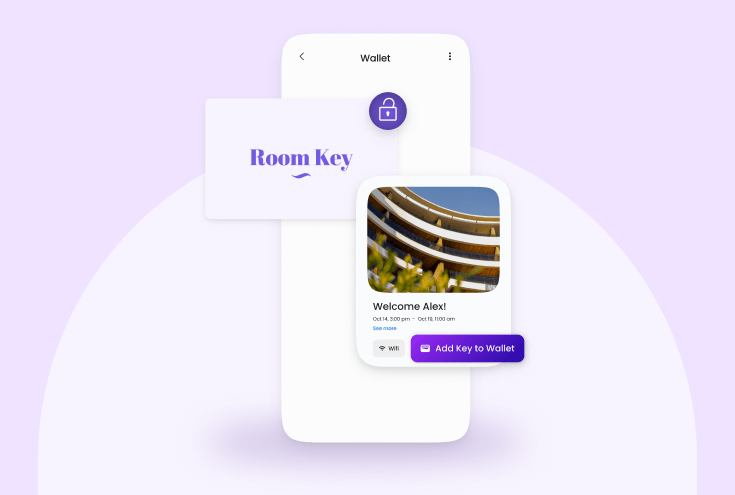
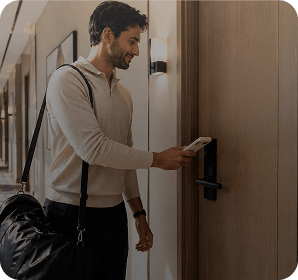
The second kind, guests never notice — because it works. The mobile key arrives before they land. The check-in flow already knows they prefer the higher floor. The 11pm request for an extra pillow gets a real acknowledgment before they’ve finished typing the sentence, and the pillow shows up at the door eight minutes later. Nothing about the experience announces itself as technology. It feels like a property that paid attention. The guest writes the review and credits the staff. Internally, the staff knows the truth: they were able to be that attentive because the system handled the unloved 80% of the operational work, and let them focus on the human 20%.
The first kind generates adoption charts. The second kind generates loyalty.
Most hotel groups still evaluate their technology stack the way their CFOs and IT teams prefer to evaluate it: from the operator dashboard. Did adoption rise? Did ticket volume fall? Did the contact center handle fewer calls? Did upsell revenue per stay climb? These are legitimate questions, and the answers should be clear before any contract is signed. But they are, importantly, the wrong place to start.
The operator dashboard measures what the operator can measure. It rarely captures what the guest feels. A guest doesn’t experience a 22% reduction in front-desk wait time as a 22% reduction in front-desk wait time. They experience it as the difference between an arrival that feels welcoming and one that feels like a DMV visit. They don’t experience a self-service portal as a deflection KPI; they experience it as either a relief or a wall. They don’t see the upsell engine; they see whether the property remembered their anniversary.
A more useful question, and one that fewer GMs are asking, is this: when a guest tells me what was great or terrible about their stay, can I trace it back to a specific moment inside our technology workflow? Most of the time, the answer is yes. The five-star review that mentions how attentive the front desk was almost always corresponds to a property where the staff were not buried under paperwork at the moment that guest walked in. The one-star review that uses the word ignored almost always corresponds to a property where a guest request fell into an inbox no one was monitoring.
Technology that disappears into the guest experience is built on a different design philosophy than most hotel software has been built on. It is not enough to digitize the existing workflow. The existing workflow was built around the assumption of a fully staffed property, repeated in-person guest touchpoints, and a guest tolerance for waiting that no longer exists.
The technology guests don’t notice tends to share a few traits. It assumes context — it understands that the family checking in at 9pm with two tired children does not want a 20-minute upsell pitch. It anticipates need, pushing information ahead of the question rather than in response to it. It collapses the distance between request and resolution — a guest asking for an extra towel does not get a ticket number, they get a towel. It speaks the guest’s language, sometimes literally, but always tonally. And it never makes the guest do the staff’s coordination work for them. If the kitchen, front desk, and housekeeping aren’t already aligned, the technology stitches them together silently, instead of asking the guest to repeat themselves to a third department.
These are not magical capabilities. They are the result of building the guest experience as a single connected journey rather than a set of disconnected modules. Most hotels still operate with five to seven systems that don’t talk to one another. The guest experiences the gaps between those systems as the staff seeming inattentive.
Most current conversations about AI in hospitality are framed as a question of capability: what new things can AI do? That is the operator’s question. The guest’s question is much simpler. The guest asks whether the hotel paid attention to them. Whether the property remembered what they asked for. Whether someone responded when they needed them. Whether the hotel felt like it was being run for them, or for itself.
AI’s proper role in hospitality is not to give guests new things to do. It is to make the existing service feel faster, more attentive, and more personal at a scale that 10% below pre-pandemic staffing levels cannot otherwise sustain. The best AI in a hotel is invisible. AI summarizes the guest profile in the two seconds before the staff member opens the door. AI drafts the response to the 1am WhatsApp request so the on-duty night manager can review and send it in 30 seconds instead of three minutes. AI catches a guest’s dissatisfaction in the in-stay sentiment signal hours before it becomes a public review, and routes it to the duty manager while there’s still time to recover. The guest never knows the AI is there. They only know the hotel felt unusually attentive.
That is the part of the AI conversation that doesn’t get enough airtime. Guests are not impressed by AI. They are impressed by service. AI is the only mechanism that allows a thinly staffed property in 2026 to deliver the kind of service that a richly staffed property delivered in 2019. The right framing is not “AI as guest-facing innovation.” It is “AI as the operational system that lets the human moments still happen.”
For GMs and ownership groups looking honestly at their current stack, this suggests a different starting question than the one usually asked.
The conventional question is what the technology does for the operation. That question is fair, and the answer should be clear before any contract is signed. But there is a second question, more often skipped, that is at least as important: when a guest interacts with this technology — or interacts with a staff member because of this technology — does the experience feel like the hotel paid attention to them, or like the hotel made them work?
The technologies that pass that second test are usually worth keeping, even when their dashboards look unspectacular. The technologies that fail it are usually worth replacing, even when their dashboards look strong. Operators who have made the shift toward this kind of evaluation tend to describe a similar pattern: their tech stack gets simpler over time, not more complex. Two or three platforms doing connected work tend to outperform seven that each handle their own slice.
The strategic shift, in the end, is this. Guests are not asking hotels to become more technological. They are asking hotels to feel like hotels again — present, attentive, generous, fast — at a moment when the labor model that used to deliver that feeling is no longer available. AI is not the answer to that question. It is the instrument. The answer is still hospitality.