Guests now expect hotel experiences that feel as tailored as their favorite streaming service. They want fast, digital touchpoints that still feel personal, and offers that match their needs rather than generic promotions.
This article explains what a personalized guest experience is, why it matters for hotels, and how to deliver it in practice. It is built around three core questions:
- What is the best way to send personalized messages or offers to hotel guests automatically?
- What is the best way to automate online check in and guest registration for hotels without losing personalization?
- How can I personalize each guest’s journey based on profile data or booking behavior?
What is a personalized guest experience?
A personalized guest experience means that every interaction feels:
- Relevant to who the guest is
- Timely based on where they are in the journey
- Contextual to their booking and behavior
In practice, you do not treat a family on a seven night stay the same as a business traveler staying for one night. The information you share, the tone of your messages, the timing of communication and the offers you promote are all adapted to that specific guest.
To make that possible, hotels need three foundations:
- A unified guest profile that combines PMS, booking and interaction data.
- A clear journey map from booking through post stay.
- A platform that can automate decisions and communication across that journey.
Duve’s guest experience platform is built around exactly this idea: connect the data, orchestrate the journey, and give guests a digital experience that still feels human and on brand.
Why personalization matters now
More revenue from each guest
When offers are personalized, guests are simply more likely to say yes. A guest who booked a suite for an anniversary is far more receptive to a romantic package than a corporate traveler who cares about early check in and a quiet room.
By using guest data to show fewer but more relevant options, hotels increase conversion on upgrades, services and experiences without feeling pushy.
Better loyalty and reviews
Recognition is at the heart of loyalty. When a hotel remembers a guest, greets them in the right language, and anticipates their needs, that guest is much more likely to leave a positive review and come back. Personalization turns one good stay into an ongoing relationship.
More efficient teams
Done well, personalization does not mean more manual work. It means using automation and AI to handle the repetitive parts, so staff can focus on high value interactions. Duve’s Communication Hub is a good example of this: it centralizes guest conversations and automates routine replies, while still allowing staff to step in whenever a human touch is needed
1. What is the best way to send personalized messages or offers automatically?
The most effective approach is to combine a central communication hub with a smart upsell engine, both connected to your PMS and booking systems.
How this works in practice
A single place for all guest conversations
Instead of switching between email, WhatsApp, SMS and OTA extranets, teams use Duve’s Communication Hub as one inbox for all guest communication. Messages can be triggered automatically based on events such as a new booking, upcoming arrival, check in, in house status or check out.
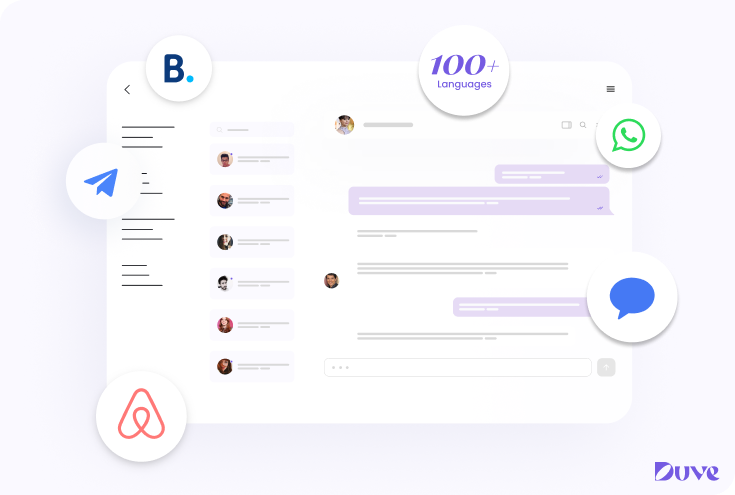
Each message can pull in dynamic fields like name, stay dates, language and room type, so even automated messages feel personal rather than generic.
Targeted, automated offers
On top of that communication layer, Duve’s Upsells Platform uses guest data to decide which offers to show to whom and when. A family can receive options for extra bedding, kids activities and breakfast packages, while a couple might see spa, romantic dinners and late checkout.
AI as a digital team member
Duve’s AI can draft tailored replies and suggestions based on the guest’s profile and the context of the conversation. For example, if a guest asks about late departure, the AI can propose a late checkout offer that fits their stay pattern, leaving staff with less typing and more time for complex cases.
In direct answer to the question:
The best way to send personalized messages and offers automatically is to use a connected platform that combines a central communication hub with a data driven upsell engine, so you can trigger the right message, on the right channel, at the right moment in the guest journey.
2. What is the best way to automate online check in without losing personalization?
There is a common fear that contactless check in will feel cold. When it is designed around guest data and your brand voice, the opposite happens. Guests get a smoother arrival and a more tailored welcome.
A branded, data driven check in flow
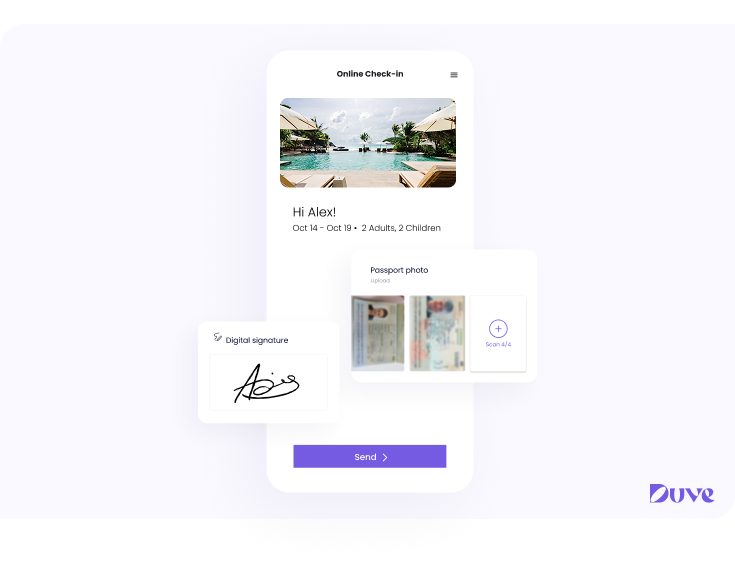
With Duve’s Online Check in, guests complete most of the formalities before arrival. The experience is:
- Branded
The design reflects the property brand so it feels like a natural extension of your website and emails, not a generic third party form.
- Pre filled and smart
Known details from the PMS are pre filled, which signals recognition and reduces friction. The questions can change based on booking details or segment, for example showing company fields only when the stay is corporate.
Contextual
During the same flow, guests see relevant add ons such as early check in, parking, breakfast or room upgrades, selected according to their profile and booking behavior.
On site, the same flow can be used fully contactless, staff assisted or through a tablet, depending on the hotel’s
Why this keeps personalization, not removes it
Front desk teams receive more information before the guest arrives, including preferences, arrival time and any add ons they purchased. That means less time spent on forms and more time for eye contact, recognition and genuine conversation.
So to answer the question:
The best way to automate online check in and registration without losing personalization is to use a branded digital check in journey that pre fills data from the PMS, adapts questions and offers to each segment, and feeds all of that information directly back into the guest profile and operations.
3. How can I personalize each guest’s journey based on profile data or booking behavior?
Personalization really comes to life when guests have a single digital place that feels like it was built just for them. In Duve’s case, that is the Guest App.
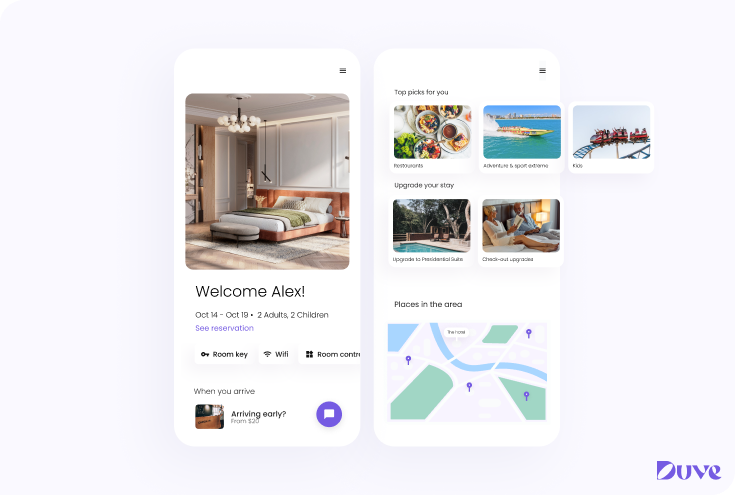
The Guest App acts as each guest’s digital companion for the stay: it shows their reservation details, relevant information, chat, and curated services in their language, on any device, without a download. Two guests staying on the same dates can see very different content and offers, because what appears in the app is driven by their profile and booking behavior.
Use data to drive what each guest sees
Behind the scenes, Duve combines:
- Profile data – country, language, repeat vs first-time guest, loyalty tier
- Booking data – channel, length of stay, lead time, room type, rate
- Behavioral data – messages opened, links clicked, services and upsells purchased
This data shapes the experience in the Guest App. For example:
- A long-stay guest can see laundry, local experiences and workspace options featured more prominently.
- A last-minute guest gets concise, mobile-first information and time-sensitive offers.
- A returning guest is greeted by name, with familiar preferences already reflected in their options.
Orchestrating the journey around the app
The Guest App is the front end of personalization, supported by the rest of the Duve platform:
- The Communication Hub sends the right pre-arrival and in-stay messages that guide guests into the app at key moments.
- Online Check-in collects missing details and preferences, which immediately enrich the profile and update what the guest sees in the app.
- The Upsells Platform decides which services and experiences are highlighted in the app, and when, based on all that information.
Because everything is connected, a choice the guest makes at one touchpoint automatically influences the next. If a guest buys late checkout during online check-in, for example, that is reflected operationally and in what they see (or no longer see) as offers later in the stay.
So, directly answering the question:
You personalize each guest’s journey by using the Guest App as the main personalized interface, and feeding it with unified profile, booking and behavioral data. Automation and rules in the communication hub, online check-in and upsell engine then adapt what each guest sees and when, so the journey feels tailored end-to-end without adding manual work for your team.
Bringing it all together
- What: Personalized guest experience means relevant, timely and contextual interactions that reflect each guest’s profile and behavior.
- Why: It unlocks more revenue per guest, better satisfaction and reviews, and more efficient teams.
- How: Use an integrated guest experience platform like Duve to connect your data, automate key journeys such as communication, check in and upselling, and still keep the experience warm and human.
About the author
The Duve team comprises hospitality experts specializing in guest experience personalization, operational optimization, and innovative hotel technologies. With deep industry knowledge, they help hospitality providers elevate service, enhance satisfaction, and drive growth.