

What Drives Hotel Upsells in 2025? Top Revenue Leaders Reveal All
 By Duve Team
Stay updated on the latest Guest Experience and Hospitality Tech updates.
Upselling used to be the least predictable part of the guest journey. You’d train your front desk to offer room upgrades, cross your fingers, and hope something sticks. Sometimes it did. Mostly, it didn’t.
But that was then. In recent years, upselling has become smarter, automated, and significantly more profitable. New digital guest journeys, along with context-based targeting, are changing the way hotels think about optimizing guest revenue.
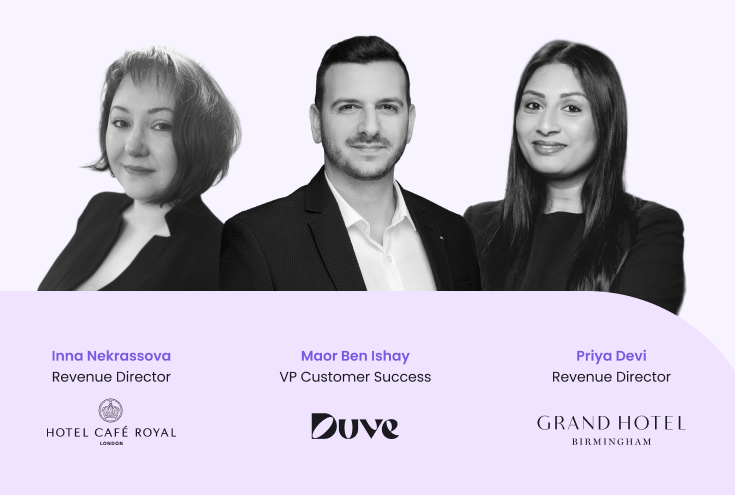
To discuss this, we invited three hospitality leaders to share how they’re leading this change on the ground on Duve’s Hospitality Revenue Leaders webinar:
To give context: Hotel Café Royal is a luxury 5-star-plus hotel located on Regent Street in London. It caters to a global, high-end audience and offers a deeply curated guest experience. The Grand Hotel Birmingham, while stylish and upscale, primarily serves a more local or domestic market with a strong focus on service personalization at scale. This contrast helped illuminate how different hotel types are approaching upselling in 2025.
Across different hotel types, the same principle held true: the upsells that work best are timely, contextual, and relevant.
“If you don’t know who you’re talking to, no upsell is going to resonate,” says Priya Devi, Revenue Director at The Grand Hotel Birmingham, a luxury property serving both business and leisure travelers.
At the hotel, her team makes a quick, friendly phone call to guests three days before arrival with a simple question:
“What brings you to Birmingham?”
That one question, explains Devi, shapes everything. “Once they tell us, we know how to add value.”

Revenue Director
The Grand Hotel Birmingham
At Hotel Café Royal, a landmark property in London’s Regent Street, Inna Nekrassova has built her revenue strategy around these contextual moments.
Nekrassova trains her team to carefully listen to guests and capture the emotional context in every interaction:
“If someone books a standard room for four nights but mentions it’s their anniversary, we turn that data point into a curated offer: champagne, spa access, late checkout”.
Maor Ben-Ishay, whose team at Duve supports hundreds of hotels worldwide, explains how technology can make that level of personalization scalable:
“We help hotels collect the right contextual signals: booking behavior, travel purpose, group size, and use them to build targeted offers that align with each guest’s natural preferences,” he says. “Context means we’re no longer guessing. We’re helping hotels deliver what their guests want before they even ask for it”.
Takeaway: Upsells start with getting to know your guest: why they’re coming, what they care about, and how they want to spend their time.
Everyone knows that timing can make or break an offer. But too many hotels still try to upsell at the worst possible moments, when guests are tired and just want to get to their room.
Devi shares a typical example: “Say a guest checks in late after a long drive. That’s not the moment to pitch a dinner package. But maybe after their first night, once they’ve settled in, that’s when we can suggest a spa treatment or afternoon tea.”
For Nekrassova, timing starts even earlier, at the ‘Dreaming’ stage, where potential guests are researching and imagining their stay.

Director of Revenue
Hotel Café Royal
Ben-Ishay unpacks the power of timing in driving upsells. Most hotels, he explains, think in rigid time blocks like ‘send this offer two days before check-in’. But timing doesn’t always work that way.
Instead of asking, ‘Has it been two days since they booked?’ we ask, ‘Have the guests checked in? Used the spa? Ordered room service?’, says Ben-Ishay. “That’s how you get timing right”.
Takeaway: Trigger upsells based on guest behavior instead of preset dates.
Devi, Nekrassova, and Ben-Ishay all agree: hotels consistently fail at connecting offers to guests’ actual needs. As Devi asks, “Would you buy what you’re trying to sell? “Half the time, staff didn’t really have the chance to try the upgrade they’re offering.”
To fix this, Devi started a program where her team actually experiences offerings like the spa, bar, and restaurant firsthand. “You can’t describe a signature dish if you’ve never tasted it,” she says. “And guests can tell when you’re bluffing.”
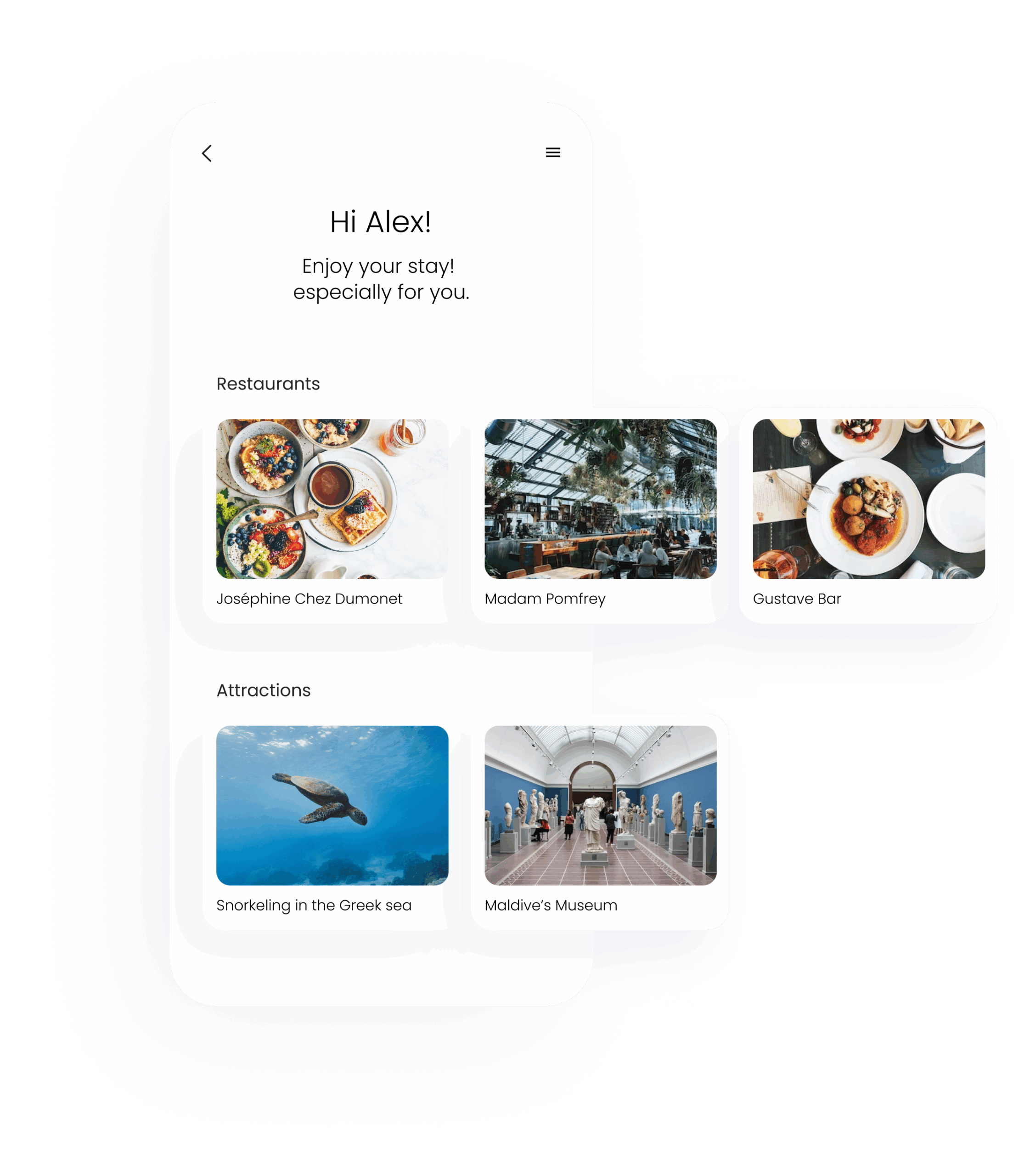
But as she points out, relevance also depends on what you show guests before they even book.
Revenue Director
The Grand Hotel Birmingham
Nekrassova weighs in with another important layer: operations.
“Hotels experience two main barriers to upselling,” she says. First, staff often aren’t trained or rewarded for doing it well. Second, there’s real fear about availability: what if you upsell a suite that’s not actually available?
Ben-Ishay is all too familiar with this challenge. Yet today, he says, there are plenty of good solutions. Hotels that prioritize automation use smart guest experience platforms that check inventory and service availability against real-time operational data.
This helps staff avoid suggesting upsells like wellness treatments when the spa’s fully booked, or offer breakfast when it’s already included.
Takeaway: To make upsells relevant, show clear value and check guest preferences against real-time availability
overwhelming your staff or budget.
“Many hotels struggle to personalize every interaction, given the volume of guests,” explains Ben-Ishay. But with the right platform, you can automate upsells based on logic that works context, timing, and relevance into every offer.
For example:
“Hotels are already collecting a lot of the right data,” Ben-Ishay adds. They just don’t always have a way to act on it in real time. Duve helps them connect the dots.”
The crazy thing is, it works. Automating their guest journey with Duve, hotels like The Pullman Paris Tour Eiffel made €25,000 in upsell revenue in 30 days, with every offer tailored to who the guest is, when they’re most open to suggestions, and what’s most likely to enhance their stay.
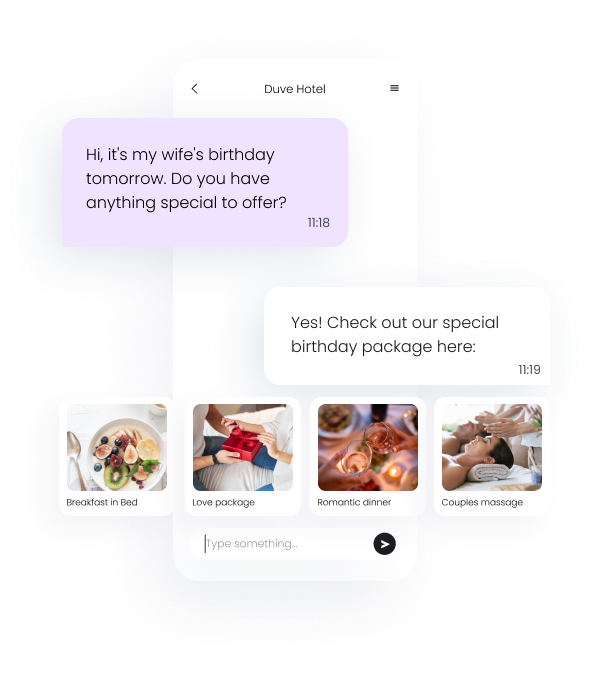
Takeaway: Leverage guest data to create contextual, timely, and personalized, upsells that guests appreciate.
Optimizing hotel upsells in 2025 isn’t about adding more offers—it’s about making smarter ones. When you meet guests at the right time, with the right suggestion, based on who they are and why they’re staying, it doesn’t feel like selling. It feels like great hospitality.
And it works.