

Hospitality Tech Roadmap: How to Choose the Right Platform for Your Hotel
 By Duve Team
Stay updated on the latest Guest Experience and Hospitality Tech updates.
The hospitality industry is at a crossroads. With so many digital solutions promising to transform operations and elevate the guest experience, many hoteliers are asking the same question: Where do we even begin?
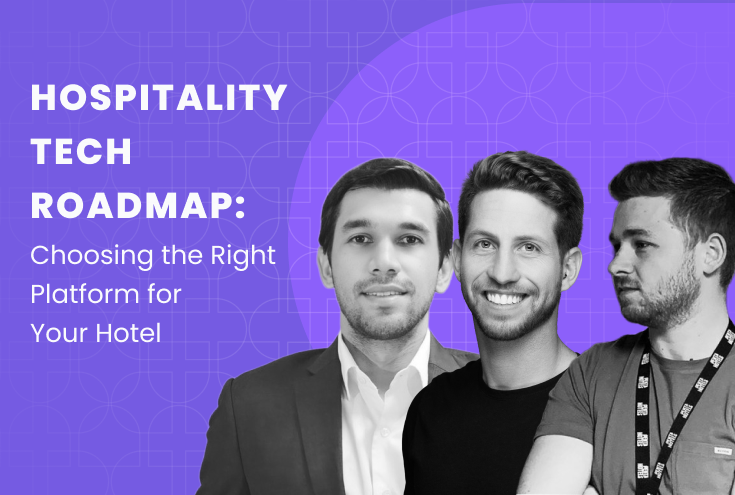
The recent Duve webinar, Hospitality Tech Roadmap: Choosing the Right Platform for Your Hotel, tackled this challenge head-on. Rather than focusing on individual systems or short-term fixes, the panelists discussed how hotels can build a strategic roadmap for technology that drives operational alignment, guest satisfaction, and measurable impact.
The expert panel included:
Together, they explored how hotels can move from tech overload to tech clarity, ensuring every system supports both staff efficiency and guest satisfaction.
The conversation began with an important realization: most hotels do not need more tools. What they need is a clear hospitality technology roadmap that connects people, data, and processes across the entire guest journey.
Over time, hotels have accumulated systems for nearly every task — from online check-in and upselling to guest messaging and room management. Yet few of these tools truly work together. The result is inefficiency for staff and inconsistency for guests.
Ron Premmaneesakul shared that Minor Hotels shifted its focus from acquiring more systems to strengthening its digital infrastructure.

Director of Global App Platform, Minor Hotels
A defined roadmap allows hoteliers to prioritize what matters most: platforms that simplify operations and deliver measurable improvements to the guest experience. This approach is increasingly supported by unified guest experience software that connects every stage of the journey, from booking to post-stay engagement.
Before choosing new technology, hotels must first evaluate their own needs.
Joshua Edwards explained how Penta Hotels began its digital transformation journey by performing an internal audit before speaking with any vendors.

Operating Systems Manager, Penta Hotels
By mapping workflows and pinpointing inefficiencies, Penta Hotels realized that many challenges could be solved through better hotel platform integration rather than new purchases.
This proactive, strategic mindset reflects how platforms like Duve enable hotels to manage multiple guest touchpoints in one connected ecosystem. The goal is not to add more systems, but to align existing ones under a single, cohesive plan.
Every successful hospitality technology roadmap begins with empathy. Technology should make life easier for both guests and staff.
Joshua Edwards explained how his team conducts discovery sessions with each department to understand their processes.
Operating Systems Manager, Penta Hotels
At the same time, guest expectations are rapidly changing. Today’s travelers want mobile-first convenience paired with genuine human warmth. They want to message instead of call, order digitally, and receive personalized communication before and during their stay.
Hotels that take a human-centered approach to technology planning can deliver a seamless, consistent experience for every guest while empowering staff with simpler, more intuitive workflows.
Integration is not just a technical goal. It is a strategic foundation for hotel success.
Over the years, many properties have layered new solutions on top of outdated systems, creating data silos and manual workarounds.
Ron Premmaneesakul shared that integration is now at the center of Minor Hotels’ digital roadmap.
Director of Global App Platform, Minor Hotels
Modern hotel platform integration connects PMS, CRM, and guest engagement tools into one continuous ecosystem. This flow of information enables a complete view of the guest journey, reduces staff workload, and ensures consistent communication across all channels.
A connected platform also makes it easier to evolve over time.
No technology rollout succeeds without people. The panel emphasized that hotel digital transformation depends on staff engagement and leadership alignment.
Josh Fink explained that when teams understand how technology supports their goals, adoption happens naturally.

Product Team Lead, Duve
Engaging employees in the selection and rollout process builds trust and ensures the technology genuinely supports their daily work.
This people-first approach mirrors how Duve designs its guest experience software: intuitive for guests, easy for staff, and aligned with hotel operations at every level.
Defining success early is critical in any technology project.
Josh Fink shared that ROI should be measured not just in revenue, but in time savings, operational improvements, and guest satisfaction.
Product Team Lead, Duve
Joshua Edwards added that Penta Hotels measures success across both quantitative and qualitative metrics, including reduced manual tasks, faster response times, and improved employee morale.
When hotels track these broader outcomes, they gain a clearer understanding of how technology contributes to overall performance and service quality — not just profit.
Automation was another major theme of the discussion, framed not as a threat to hospitality but as a way to strengthen it. For many hotels, automation once meant streamlining check-ins or reducing manual work behind the front desk. Today, it represents something far more powerful: the ability to deliver personalization and consistency at scale.
Ron Premmaneesakul described how Minor Hotels uses automation to anticipate guest needs and maintain a high level of personalization.
Director of Global App Platform, Minor Hotels
Rather than replacing human hospitality, automation supports it. It gives hotel teams the space to be more present, attentive, and creative in how they engage with guests. In the modern hospitality technology roadmap, automation isn’t about doing less; it’s about making room to do more of what matters.
Looking ahead, the panel agreed that the future of hotel technology will be defined by connection, simplicity, and intelligence. Hotels are moving away from fragmented stacks toward solutions that unify data and workflows, giving teams the ability to make smarter, faster decisions.
Joshua Edwards shared that the next phase of hotel innovation will rely on open integrations and practical use of data to support both staff and guests.
Operating Systems Manager, Penta Hotels
He added that technology’s real value lies in its ability to fade into the background, creating a seamless experience for everyone involved.
This connected, intelligent approach represents the next chapter of hotel digital transformation, one that blends operational efficiency with genuine human hospitality.